
An association of importers, acting as one.
United Shippers Council exists to give the community’s importers the standing at the negotiating table that their combined freight has always warranted.
A structural answer to a structural disadvantage.
Ocean freight is bought at scale. The carriers’ best rates, most dependable space and most forgiving terms go to the shippers who can commit the most containers, and the gap between the largest buyers and everyone else is persistent.
Importers in our community moving a few hundred to a few thousand containers a year are, individually, mid-size buyers. They often pay well above top-tier contract rates, accept the free time they are offered and absorb surcharges they had no part in negotiating.
Collectively, the same importers move as much freight as some of the largest importers in the country. The Council was formed to put that collective volume to work: to pool it, to commit it in writing and to negotiate it as one buyer, so that each member contracts on terms that reflect the strength of the whole.

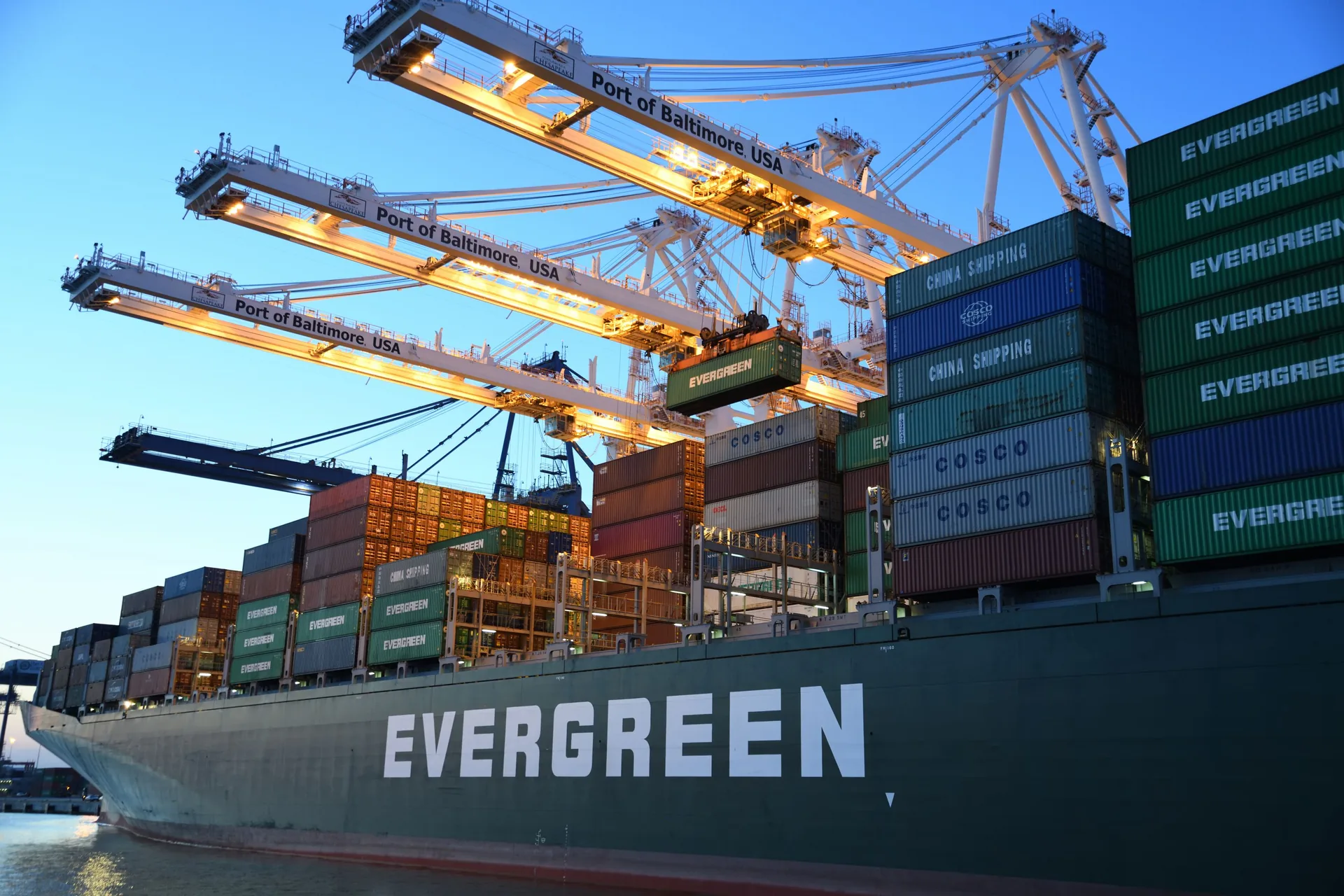
The Port
A mid-size importer, and a large one, at the same berth.
Individually, the community’s importers are mid-size buyers. Combined, they stand with some of the largest importers in the country.
What the Council is, and what it is not.
| The Council is | The Council is not |
|---|---|
| A shippers’ association | Not a freight forwarder or a provider of logistics services. Members book directly with carriers at the contract rates. |
| An independent LLC | Not an affiliate or division of any logistics provider. The entity stands on its own, separate from every member and every vendor. |
| One buyer, many principals | Not a pool of shared information. No member sees another member’s rates, volumes or lanes. |
| A negotiating counterpart | Not a gatekeeper. Members keep their own forwarders, customs brokers and warehouses, and no vendor is required. |
| Governed by a board | Not run for any single company. The Board is drawn from leading supply chain executives in the community. |
Six articles of association.
The principles below describe how the Council conducts itself. They are given formal effect in the membership agreement drafted by maritime counsel.
Independence
The Council is an independent limited liability company, separate from any logistics provider. It answers to its Board and its members, and to no commercial interest besides theirs.
Confidentiality
Each member’s rates, volumes and lanes are disclosed to the Council alone. No member sees the commercial information of another.
Commitment
Volume is committed by lane, in writing. The Council negotiates only on freight its members have undertaken to ship, which is what makes its word credible to carriers.
Counsel
The membership agreement and every service contract are drafted by maritime counsel, and the Council’s affairs are conducted with the governing law clearly in view.
Freedom of vendors
Members retain their forwarders, brokers and warehouses. The Council negotiates ocean contracts; it does not route, book or handle a member’s freight.
Stewardship
The Council is founded within the community and governed by those who know its trade. Its purpose is the long-term strength of its members, season after season.
The obligations the Council accepts.
An association that holds the commercial confidences of competing importers must hold itself to a standard above the ordinary. The Council accepts the following obligations as a condition of its own existence.
Information barriers
Member data is received by the Council under NDA and used for one purpose: the negotiation of the members’ contracts. It is never circulated among members, and members do not exchange pricing among themselves through the Council.
Fidelity to the law
The Council conducts its affairs within the Shipping Act and with the antitrust laws in view, which the Shipping Act does not displace for the members of a shippers’ association.
Vendor neutrality
The Council requires no forwarder, broker or warehouse of any member. A member’s choice of providers is, and remains, its own.
Conflicts of interest
Directors disclose their interests and stand aside from any matter in which those interests are engaged. No director, founder or affiliated company is given preference in the Council’s affairs.
Fidelity to commitments
The Council undertakes to carriers only what its members have committed in writing, and holds itself answerable for performance on every contract it signs.
Records and discretion
Service contracts and their amendments are retained as federal regulation requires, and the Council speaks publicly about its members only with their consent.
Established 5787
An institution on an established footing.
The Council’s seal bears the year of its establishment in the Hebrew calendar, 5787, corresponding to 2026 and 2027. The structure it adopts is far older: shippers’ associations have been recognized in federal shipping law since the Shipping Act of 1984, and ocean carriers sign service contracts with them every year.
The Council brings that structure to the community, and to a single table.
Membership is by application.
Applications are reviewed by the Council in confidence. Qualified importers receive the membership agreement and fee schedule under NDA.